Wednesday, 17 April 2013

Generating a character:

Quick Sketches

Rather than starting with my usual process of creating silhouettes, i thought i would start this design by getting straight into rough sketches. I followed pretty much the same principle as i would create a silhouette (using the sketch to define shape, form. and outline, leaving out more detail to further work) but i think this technique makes for a design that is more readable at a glance, and leaves less to interpretation. I don't think it is necessary to produce a silhouette if i am creating designs only for the benefit of my own idea progression. starting with silhouettes is more useful to get an idea across to a decision making client of team member not directly involved in the design process.

first sketches

These are the first set of sketches i created for this project. They are for the character of the "hunter", as outlined in my brief.  As stated previously i want to base the "Hunter" of a humanoid, or at least bipedal body type, with the "Hound" taking more of a bestial form. I went into more detail on some than others, but only when necessary. 

idea development

After the first set of sketches, i felt the idea of humanoid designs might be a bit limiting, so for this set i tried to push in a less human direction. However as i was producing them, the characters felt less like characters, less like individuals that could experience emotions and relationships, more like aliens in the league of the xenomorph species, soulless devourers than something that a character would want or be able to play as, and from the perspective of. 

pushing the shape further

Saturday, 13 April 2013

There are no new ideas...

For better or for worse we live in a wold that is saturated in design. It is often easy to see the origin or inspiration of many designs thanks to years of being exposed to visual entertainment media. However this makes it seriously difficult to come up with a truly original piece of design.

But it is something that needs to be balanced  knowledge of how natural forms work, what is pleasing to the eye remain constants though design. and having a wide mental visual library to draw reference from can also help to create designs that viewers are more ready to expect, because their form or color already carries connotations

Even innovative and fresh designs often reference the natural world in some way. in creature design, particularly humanoid body types (though this goes for allot of bipedal designs) it is important to be mindful of the feasibility of the design, with regards to the technical working of the body. this is because w are so used to looking at the human figure, if something is trying to closely replicate it we pick up on it as strange looking, this can be detrimental to an artist, though it can also be a tool, if the design is perhaps meant to look unnerving, or twisted bastardization of the human figure. the same goes for figures replicating, other things that we might be familiar with. an alien creature, that has a feline body shape, carries the connotations of a sleek stealthy hunter, as an artist i have to be conscious if were i take my research from to make sure it also has the same feeling what i want to convey with my design. 

Black Panther

Thanator (James Cameron's Avatar).... remind you of anything?

The design of the Thanator is clearly reminiscent of a panther  despite obvious difference they both carry a similar shape dynamic. The thanator design also shares the same joint layout of the legs as cats (digitigrade- meaning walking on the digits) where the bone of the foot actually forms the lower half of the leg.

Mood boards:

This first moodboard i created to generate ideas of bipedal aliens that are more characters than creatures, this will be for my "hunter".

Also for my hunter moodboard, here i gathered images of the level of technology and feel of the clothing that i think i might use for the character. 


Reference Material:

I felt i had to include this character from district 9, i thought it was appropriate to the type of character i could design


Thursday, 11 April 2013

From Wolf to Dog

Creature research:


I have looked at a couple of documentaries on the domestication of dogs into wolves:

Mankind the story of us: Domesticating the dog

And man created dog: A national geographic presentation

Natural world: A wild dog's story

I looked at this final video to to find attributes and characteristics of wild hunting dogs that could translate to visual traits of my design. I also wanted to see the relationship between packs of wild dogs, and if ose relationships have any effect on the way they look. Other than the sustaining of wounds (which would create distinguishing marks and scars on the body, there is little other than the color/ pattern on their coat to distinguish many pack animals.  Individuals within a group can look very similar, and are (to our perception at least) just one random member of that race. I think this can be a way to differentiate between a creature and a character. a character is a specific individual, where as a creature could just be an example of its race, un-distinguishable from its contemporaries. However, to develop a bond with a creature we the viewer/ player would have to be able to identify its characteristics, thus making it more a character than simply a generic member of a species, in that way the player can start to form more of a bond with a npc creature.

There is however something else that this made me think about when considering how i would design my creature, the size.  In nature the dominant animal in the pack is usually the largest, this means, that visually, it would not make sense for (with a predator at least) the assisting hunting animal to be larger than its character counterpart, as by most logic, if it wer, it would simply eat any smaller character as it would receive no benefit from a mutialistic relationship.  larger predators tend to hunt on their own, though their are of course always exceptions. 

lions... not ideal candidates for domestication

 This is simple a rule in nature, and some would not say it is necessary to take into consideration when creating art, but i think it is important to allow the viewer to suspend their disbelief, and if the design has some grounding in reality, just by means of our own expectations and pre-conceptions of how things "should" look. 

Considering this i think it would keep the design of my creature reasonably smaller than my character. 

Generating Ideas

I have found the universes of Warhammer and Warhammer 40k tabletop games a useful place to find examples of aesthetically similar ecosystem. The various races resemble one another, shearing features

Example: Kroot


Kroot


Kroot Hound
Krootox

Knarloc

To denote that they have all evolved in the same ecosystem, the factions of a Kroot army all have the same beak with a strong lower jaw, and spine like hair protruding from the back of the heads. they also all seem to share high, and defined cheek bones and sunken eyes. These attributes are enough of a visual link to show their shared evolution or dna. the human brain is particularly adept at picking up on repetition, design like this plays to that, i hope to use this project learn how to make design decisions in this way

Creating a brief:

My design brief for my concept art is to: "Create a series of work showing a Primitive alien hunter and his hound."

The reason i have given myself this brief over the other possibilities is because i think it will be a more interesting pretext to explore environmental effects on the aesthetics of two figures with a close, functional relationship. By specifying a "primitive alien" i want to be able to show that the two beings reflect one another and the environment they inhabit, mirroring the working mutually beneficial relationships that early man had with domesticated dogs. Outside of professions such as sheep farming the relationships between humans and animals have become more one sided, as dogs become more domesticated, we no longer rely on what was once an important part of our success as a race, and developing making our hunting more efficient  and later cultivating the ability to herd and farm animals. Our environment and available materials also have less of an impact on the cloths we wear and the way we dress in modern times, early humans dress reflected the environment they were in, as it was governed far more by the available resources, i want to show this in the design of my character. 


This brief does not specify the type of environment or landscape, as such the brief is fairly open, i will be creating a video game protagonist and their companion. Hypothetically the series of work i am creating could go on to dictate the story and the setting of the game, though in reality in a studio i would probably be given an environment to fit my character into rather than building the environment around the character. 

I will be interpreting the term "hound" in the brief very loosely, to mean a creature (not necessarily to mean a creature of canine genus) that is used to assist the character in the act of hunting  i will aim to make the attributes of the creature reflect that. 
By having design coherence with the two creatures i want to show a close, more coexisting relationship in my designs. 


lets see if dogs look like their owner afterall...

Monday, 8 April 2013

Mutualistic relationships

Mutualistic relationships:


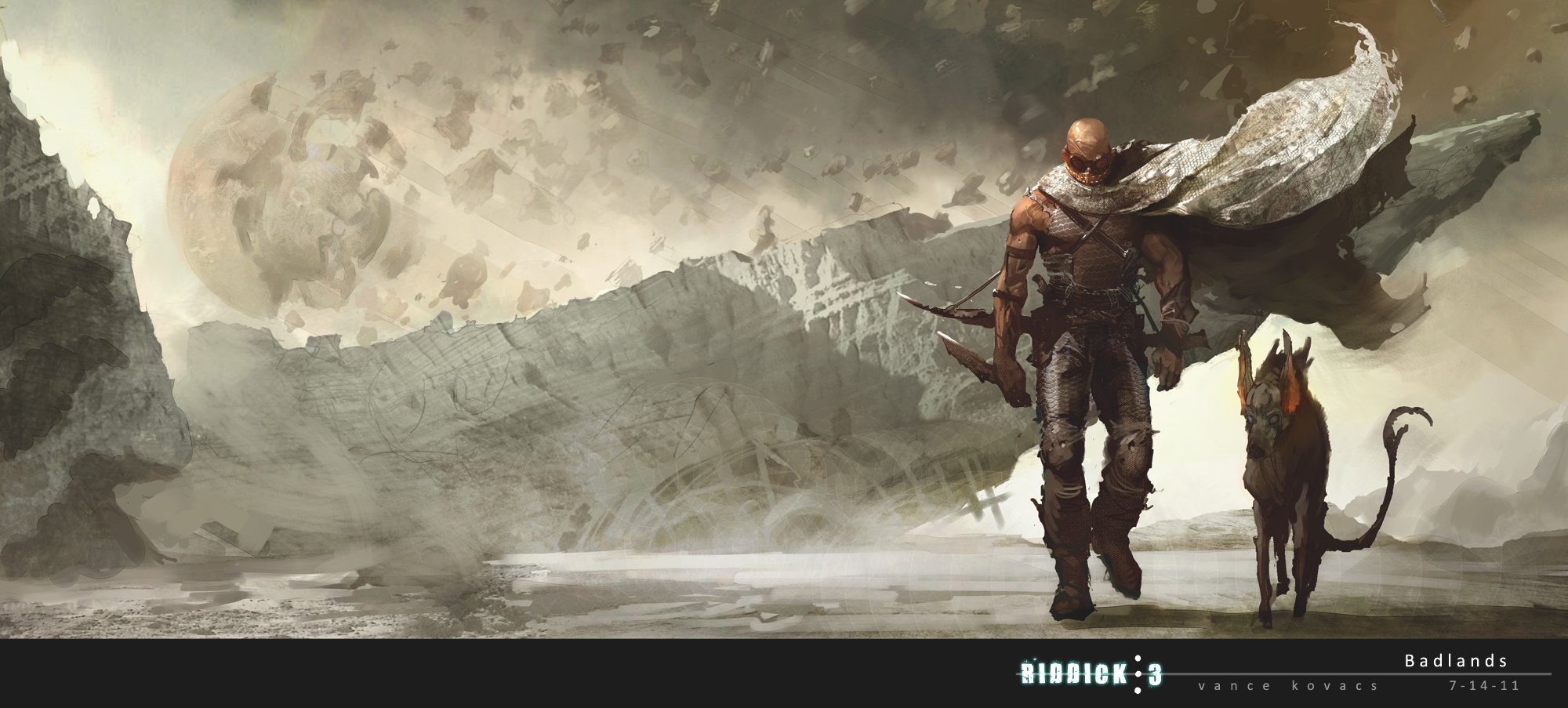
(Riddick 3 Concept Art)

I want to use the example of a domesticated animal like a human to a dog rather than a relationship like clown fish and coral as it is far more likely to be the kind of relationship design that would occur in games.


In video game animal accomplices often take many forms, they are a character like any other npc that the player interacts with. giving a steed or pet in a game its own distinct personality or mood is an important part of creating the connection or bond between the player and the npc, visuals play a strong role in this, as well as perceived shared experience.
some examples of the roles that "creatures" play in games, other than enemies:

Familiars:
These are a concept taken from european folklore, ther were believed to be a spirrit in the guise of an animal that practicers of "witchcraft" used to assist in their practice.

These can take various forms, though there are the obvious ones, like a witches cat:


or rat...


steeds- can be animals that the player often develops a bond to/ connection with

Legend of Zelda (Link and Epona)

Shadow of the Colossus (Wander and Agro)

Um... no. Bad example


pets


servants/ minions:


The rats are a fitting animal to use to the character of Dishonored because they suit the feel/mood of the game's environment.


Learning Agreement

Learning Agreement:
Here is a not so brief overview of the work i plan to complete for this project. i split it into a what, why and how to better cover everything i need to do. pending a discussion with tutors, i hope to include work from an extra curricular project (a side scrolling platformer game that i am involved in making) called "The Wanderer: Tears of Irigo", as i am putting in allot of time into the creation of this game, and it has become a large part of my learning path towards the career that i am aiming for. My overall objective is to build an indie game studio using this game as a starting point.


What?
For Ba6, I intend to produce a series of concept art for a primary video game character, and an accompanying creature. This will be submitted in the form of character sheets and supporting artwork. I will back up this work, by producing a 3d model of the character, that has been diffuse, normal, and occlusion mapped. By creating environmental concept and mood paintings, I will give context to the character artwork and model I will produce, I will need to develop a greater understanding of artistic fundamentals, use of colour, light, form, and line.  I do not intend to import my character to a game engine, as it will lack the relevant rigging and animation that would make it a “playable” character; I will present the model in a turntable video reel.
 I will put particular emphasis on working to a video game industry production pipeline, to do this, I will write myself a design brief, in a similar style and depth that an in house artist would get. My work will be based around the theme of “Symbiosis”,
My character and creature will be appropriate to a fantasy setting. However, I will do research into genre and sub-genre, and other elements that contribute to aesthetics, to make sure that my work is appropriate.


Example: (Final character sheet; Marcus Phoenix) i want to do a main character because they tend to be more interesting to design than an NPC (non player character), the model of the character would also have a higher allotted poly-budget than an npc (npc's usually having around 6000 polys and principle characters being more in the region of 10000, dependent on on the type of title and publisher ect.

Why? 
My reason for designing two beings is that I will be able experiment with visual coherence of my work, between the environment, character, and creature. I find the idea of symbiosis particularly interesting as it allows me to visually explore a close relationship between game characters and their surroundings, including other creatures. I feel this is particularly important for an inherently interactive medium like video games. It is important to look at how, as an artist, I can achieve coherent designs that show the player that they belong in the same world, what gives visual cues to the player so that I know not only what to do to achieve this, but also why I should do it.
I also want to create designs that are purposeful and reflective of the character, rather than purely to produce an appealing aesthetic. It is important that my work express said characters personality, and history, through visual means. I will only be turning one of my designs into a 3d model so that I can polish that one to a high standard.
My personal focus as an artist is experimentation, of both design and means.

Food for thought...


(Winslow Homer "Hound and Hunter")
or...


(Jon Howe "The Dark Tower" - a potential direction for a rider and steed concept, the title can be open, and leave allot of interpretation. The designs in this painting are an excellent example of visual coherence. 


How? 
I will define an open sub theme, or title within the idea of “symbiosis” (such as “hunter and hound” or “rider and steed”), this will give my art more of a direction, and help me to narrow down my design choices.
The model I will create will be largely to show me that that the design that the design I have created works when translated into a 3d character. Any changes I have to make in the transition from 2 to 3d will help me to assess the areas of my concept art and design I will need to work on in order to produce designs that will work as game characters.
I will look at symbiotic relationships in nature, how they work, their effects, and their reason for coexistence, as well as the benefits that symbiotic organisms receive or give. I will then look at how this translates into visual coherence or difference.
I will find examples of industry pipelines and work flow to direct the appropriate procedure and technique, (silhouettes or thumbnails ect) I will need to use to design my character, develop, and refine it to make it ready, and viable as a 3d model. I will use a variety of different, appropriate tools and programs, depending on the piece of work in question.
I will present and submit my 2d design process in a chronological document, ending with a character sheet as I would produce it if it were being handed on to a separate 3d modeller, as well as my final character sheets

Schedule of work:
I will complete this work alongside my work for the Brainchild project (the game i mentioned earlier). For said project I will be working on creating a tech demo for a side scrolling 3d platformer that I am making in a group with 9 other GAD students.  My role in the project is “Lead Artist”, I am taking on a directorial role, guiding the visual style/ mood of the game (mostly in accordance with my own vision for the game), managing the design and production of concept art and mood paintings, as well as 3d assets and textures. I produce concept artwork for every area of the game; I also create and design assets for the game. This is why it’ useful for me to maintain and practise broad skill set, in Ba6.
My ability to direct, with clarity but also with realistic expectations will be better if I have an understanding, and more importantly, experience of the entire process of production that I will be overseeing. However this is a large commitment to my time, and as such I do not want to
My schedule will depend on the pipeline I choose to work with; as such it is liable to change.